

Imagine sitting in a classroom where the lights feel painfully bright, the sounds of pencils tapping are overwhelming, and the expectation to sit still for long periods feels impossible. For many children with Autism Spectrum Disorder (ASD), this is what a typical school day can feel like.
Children with autism often experience differences in sensory processing, communication, motor skills, and social participation, which can make classroom learning challenging. This is where Occupational Therapy (OT) becomes incredibly valuable. Pediatric occupational therapists work with teachers, families, and students to create strategies that help children participate meaningfully in school activities.
Why Occupational Therapy Matters in School?
School is one of the most important environments for a child’s development. It’s a crucial place where children learn independence, academic skills, social interaction and also daily routines. However, children with autism may struggle with:
- Sensory overload (noise, lights, textures).
- Difficulty focusing on tasks.
- Challenges with social interaction.
- Fine motor difficulties (writing, cutting).
- Emotional regulation.
Occupational therapists address these challenges by adapting tasks, environments, and routines to support the child’s participation.
Research shows that occupational therapy interventions targeting sensory processing and functional participation significantly improve occupational performance and goal attainment in children with autism. Let’s explore some evidence-based and engaging OT strategies that help children with Autism thrive in school.
7 Core Occupational Therapy Strategies for Autistic Children in School
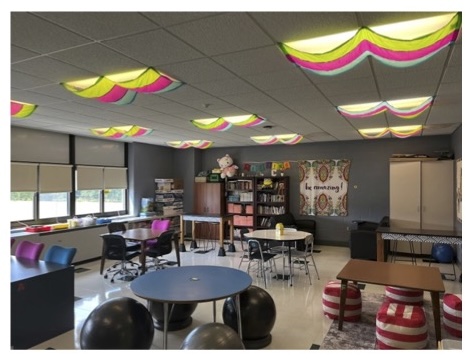
1. Sensory Friendly Classrooms
Many children with ASD experience the world differently through their senses — sounds may feel physically painful, textures unbearable, or lights blindingly bright.
In school, this means structured sensory activities embedded into the daily routine — swinging, bouncing on therapy balls, tactile play with sand or clay, weighted vests, and noise-cancelling headphones during transitions. Occupational therapists help design sensory-friendly environments, such as:
- Flexible seating (therapy balls, wobble cushions).
- Noise-reducing headphones.
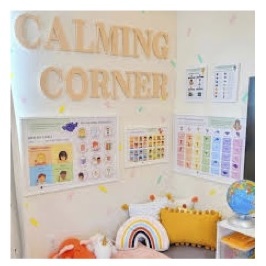
- Calm corners or sensory spaces with dim lighting and fidget tools.
- Reduced visual clutter.
- Soft lighting when possible.
Sensory-based interventions aim to support self-regulation and attention, helping children remain engaged in classroom tasks.
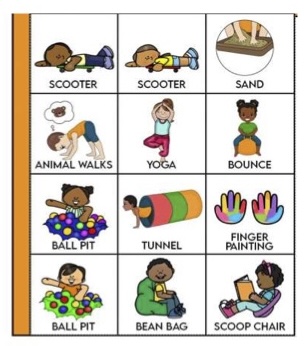
2. Sensory Activities Schedules
A structured plan of movement or sensory activities, known as a sensory activity schedule, is integrated into the school day. These scheduled activities are designed to help children regulate their sensory systems and sustain focus.
Research on classroom sensory schedules found that students with autism showed improvements in classroom task performance after participating in sensory activity programs designed with occupational therapists.
Examples include:
- Jumping or stretching breaks.
- Carrying books or classroom supplies.
- Wall push-ups.
- Obstacle courses.
- Deep pressure activities.
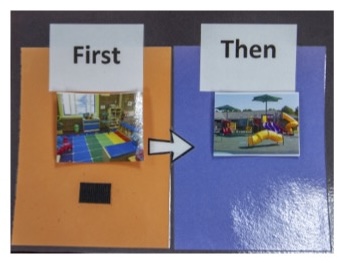
3. Visual Support and Structured Schedules
Children with ASD often process visual information more effectively than verbal instructions. Visual supports – picture schedules, task boards, social stories, and First-Then boards – provide predictability, reduce anxiety, and scaffold independent functioning.
Research consistently shows that structured visual environments significantly increase on-task behaviour, reduce challenging behaviours, and support transitions between activities.
- Post a visual daily schedule at child’s eye level using photos or PECS symbols.
- Use “First _ Then _” boards for task sequencing.
- Introduce Social Stories for new or challenging situations.
- Colour-code workstations to support independent navigation.
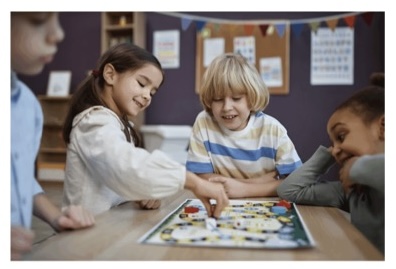
4. Social Participation and Play Skills
Play is the occupation of childhood – and OTs are experts at using play as therapy. Social participation interventions help children with ASD learn to initiate, sustain, and enjoy interactions with peers.
Evidence shows that group-based social skill programs embedded within natural school environments produce more durable outcomes than clinic-based social skills groups.
- Set up Lego clubs or co-operative board games with peer models.
- Assign “buddy roles” during unstructured times (lunch, recess).
- Teach specific social scripts for greetings, turn-taking, and conflict resolution.
- Use video modelling to demonstrate and rehearse social scenarios.

5. Fine Motor and Handwriting Interventions
Up to 90% of children with ASD present with fine motor difficulties (Hilton et al., 2019). This impacts writing, cutting, self-care tasks, and classroom participation. OTs address this through targeted activities that build grip strength, hand-eye coordination, and pencil control — while making it fun!
Programs like Handwriting Without Tears and the Size Matters Handwriting Program have demonstrated effectiveness specifically for children with ASD.
- Offer alternative writing tools: triangular pencils, slant boards, keyboards,
- Pencil grips. Integrate play-dough, threading, and lacing into fine motor warm-ups.
- Use multisensory letter formation (sand trays, textured paper).
- Break writing tasks into small, achievable steps with visual prompts.
6. Self-Regulation and Zones of Regulation
Emotional and behavioural dysregulation is one of the most significant barriers to learning for children with ASD. OTs teach self-regulation skills — the ability to monitor and manage one’s own emotional and sensory states — through frameworks like the Zones of Regulation (Kuypers, 2011) and the Alert Program (Williams & Shellenberger, 1996).
These programs use simple colour-coded systems to help children identify how their body feels and choose appropriate strategies to re-regulate.
- Introduce a “calm-down corner” with calming tools (squeeze balls, visual timers).
- Teach body-awareness language: “My engine is running too fast!”
- Practice deep breathing, progressive muscle relaxation, and mindful movement.
- Use the Zones of Regulation chart class-wide to normalise emotional literacy

7. Collaboration With Families and Teachers
School-based occupational therapy is not just about working with the child—it also involves collaboration with educators and families.
Therapists often:
- Train teachers in sensory strategies.
- Suggest classroom modifications.
- Help create individualized education plans (IEPs)
- Provide home programs for parents
However, research shows that many teachers are unaware of sensory programs created by therapists, highlighting the importance of strong collaboration between therapists and educators.
The Big Goal: Participation, Not Perfection
The ultimate goal of occupational therapy is participation.
Instead of focusing only on correcting behaviors, occupational therapists help children:
- Engage in classroom activities
- Interact with peers
- Complete school tasks
- Build independence
- Develop confidence
With the right supports, children with autism can successfully participate in school environments and reach their full potential.
More importantly, these strategies promote confidence, independence, and a sense of belonging within the classroom community.
To conclude, let us remember:
“Every child deserves the opportunity to reach their fullest potential. OT in schools is not a privilege — it is a right.”
— AOTA, 2020.
Occupational therapy plays a vital role in creating inclusive school environments where children with autism can thrive academically, socially, and emotionally. By adapting tasks, modifying environments, and supporting self-regulation and participation, occupational therapists empower children to overcome barriers in learning and daily school activities.
Book Your Free Appointment to see how we can help you create a safe and autism friendly environment in your school for children.