If your child receives occupational therapy (OT), you already know how much effort they put into everyday things—holding a spoon, getting dressed, staying calm, or using their hands to play and learn.
You may have heard your therapist mention Photobiomodulation (PBM) Therapy – sometimes called light therapy – and wondered:
- Is it safe?
- Does it hurt?
- How could light actually help my child?
Let’s walk through it together
What Is Photobiomodulation Therapy?
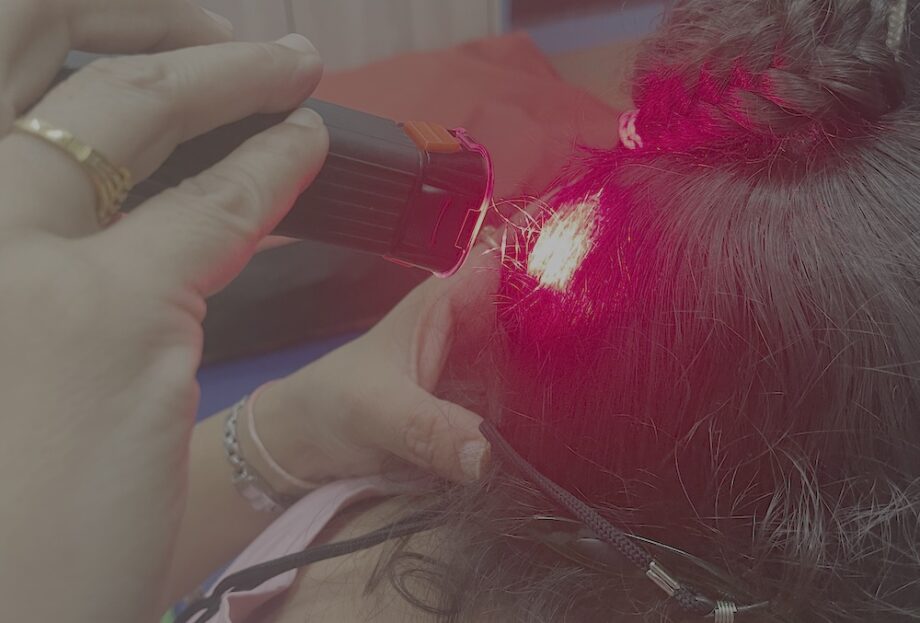
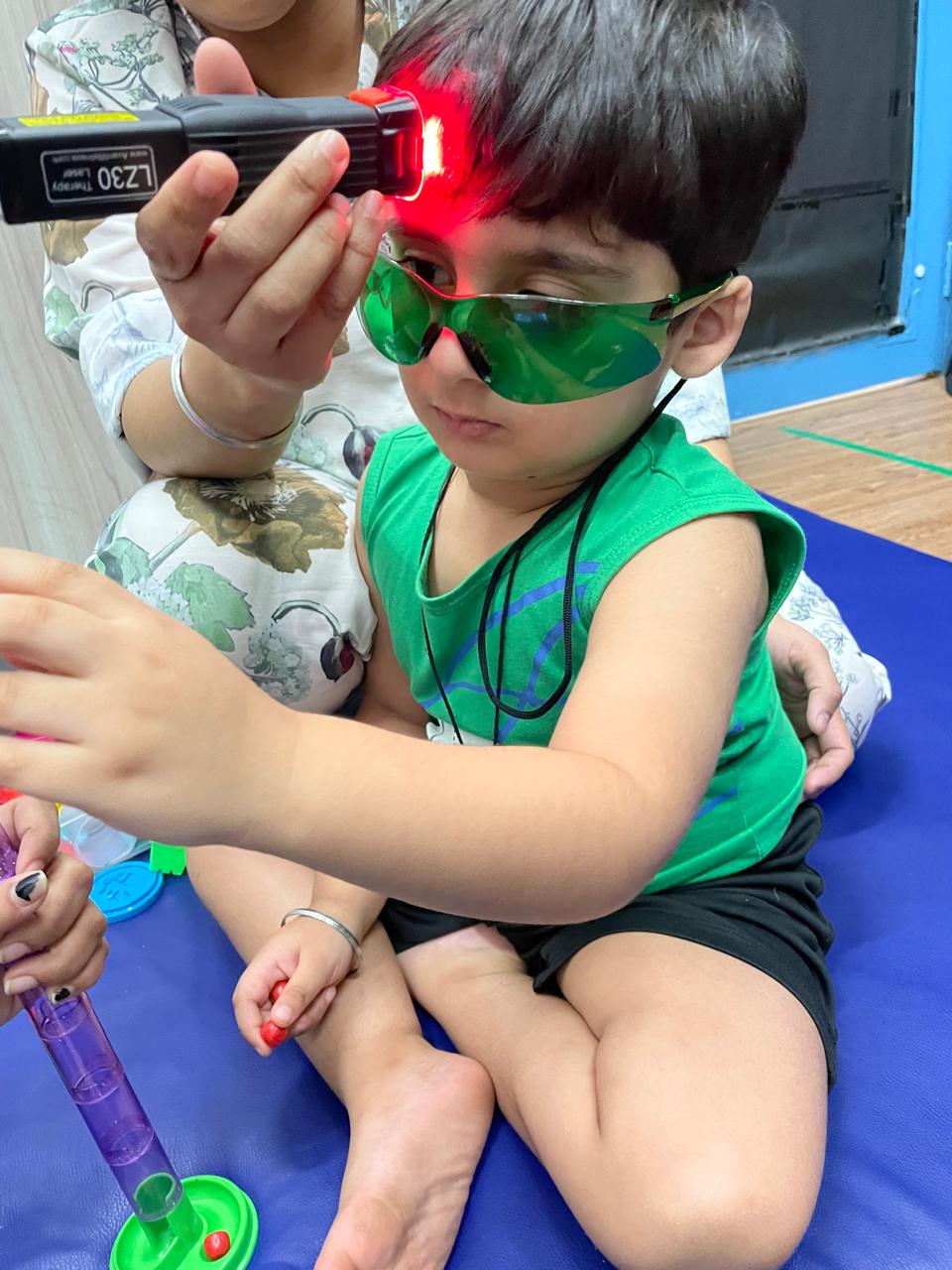
Photobiomodulation therapy uses gentle red or near-infrared light applied to the skin. It does not burn, cut, or shock – your child won’t feel pain. Think of it like giving cells a little energy boost, helping the body:
- Calm inflammation
- Reduce discomfort
- Heal more easily
- Respond better during therapy
Many children say it feels warm, relaxing, or like “nothing at all.”
What does your child struggle with the most right now?
- Sensitivity to touch
- Pain or stiffness
- Fatigue
- Trouble focusing
- Emotional regulation
- Fine motor challenges
(Parents often find PBMT helps with more than one area!)
Why Is Light Therapy Used With Occupational Therapy?
Occupational therapy helps children build skills for everyday life—playing, eating, dressing, learning, and self-care. PBMT is not a replacement for OT. It’s a helper.
PBMT may help your child:
- Feel more comfortable during therapy
- Stay calmer and more focused
- Move with less stiffness or pain
- Participate longer without getting overwhelmed
When children feel better in their bodies, they can learn and practice more easily.
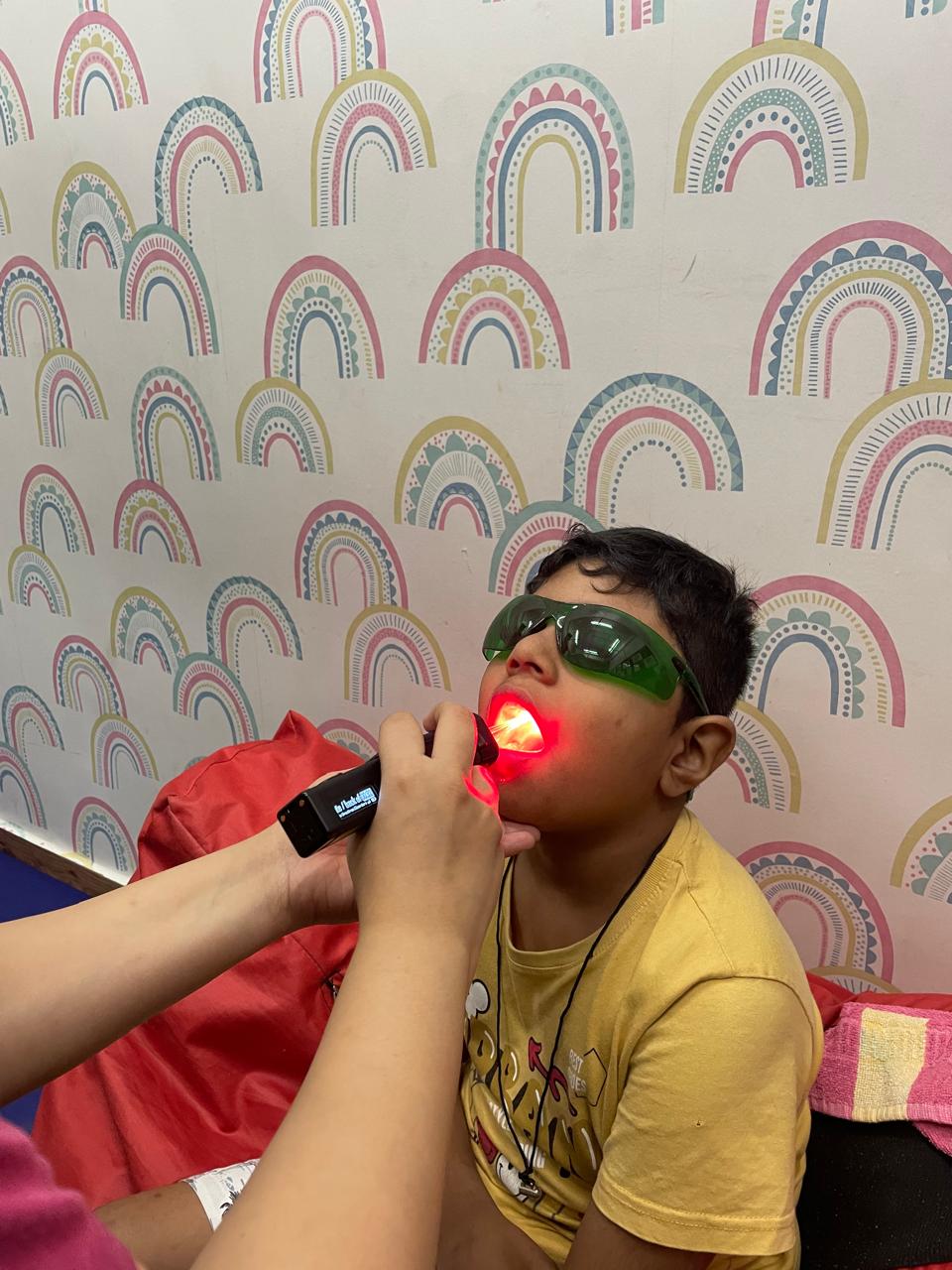
How Therapists Use PBMT in Sessions
Before Activities
- To calm sensitive muscles or joints
- To help prepare hands for fine motor work
- To support regulation before challenging tasks
During Play-Based Therapy
- Applied briefly, then followed by play or functional tasks
- Helps children tolerate movement and touch
After Sessions
- To reduce soreness or fatigue
- To help with recovery
Meet A, age 5
Challenges: Sensory sensitivity, hand weakness, frustration during tasks
Light therapy used on:
- Hands and forearms
OT activities:
- Building with blocks
- Button practice
- Drawing and coloring
What changed after a few weeks:
- Less hand fatigue
- Improved grip
- Longer attention during play
- Fewer meltdowns during fine motor tasks
“He didn’t even notice the light—but we noticed the difference.”
— A’s mom
Photobiomodulation Therapy FAQs
Does it hurt?
No. It is painless and non-invasive.
Is it safe for children?
Yes, when used by trained professionals following safety guidelines.
Will my child need to sit still?
Usually only briefly—and many therapists use it during play or calming moments.
Is it a cure?
No—but it can support progress by helping your child feel more comfortable and regulated.
Quick Question for Parents
Select the right answer. Light therapy works best when it is:
- Used alone
- Used instead of OT
- Combined with meaningful play and activities
- Used only when a child is in pain
What This Means for Your Child
PBMT is one more tool therapists can use to support your child’s unique needs—especially when:
- Sensory challenges limit participation
- Pain or stiffness interferes with learning
- Emotional regulation affects engagement
When children feel safe and comfortable in their bodies, they can grow in amazing ways. You are always your child’s best advocate. If you’re curious about PBMT:
- Ask your OT why they recommend it
- Ask how it supports your child’s goals
- Ask what changes to look for at home
Small supports can lead to big wins—and sometimes, a little light really does help